Conceptual Data Modeling & ER Design
Translating business rules into structured entity-relationship models across publishing and entertainment operations.
This case study demonstrates how business requirements can be translated into conceptual entity-relationship models before database implementation. Two different business environments are modeled: publishing and literary management, and live entertainment and instrument operations.
Project Overview
The models demonstrate entity identification, relationship modeling, cardinality and participation constraints, identifying relationships, recursive relationships, composite attributes, multivalued attributes, derived attributes, optional attributes, and business-rule translation.
Publishing & Literary Management
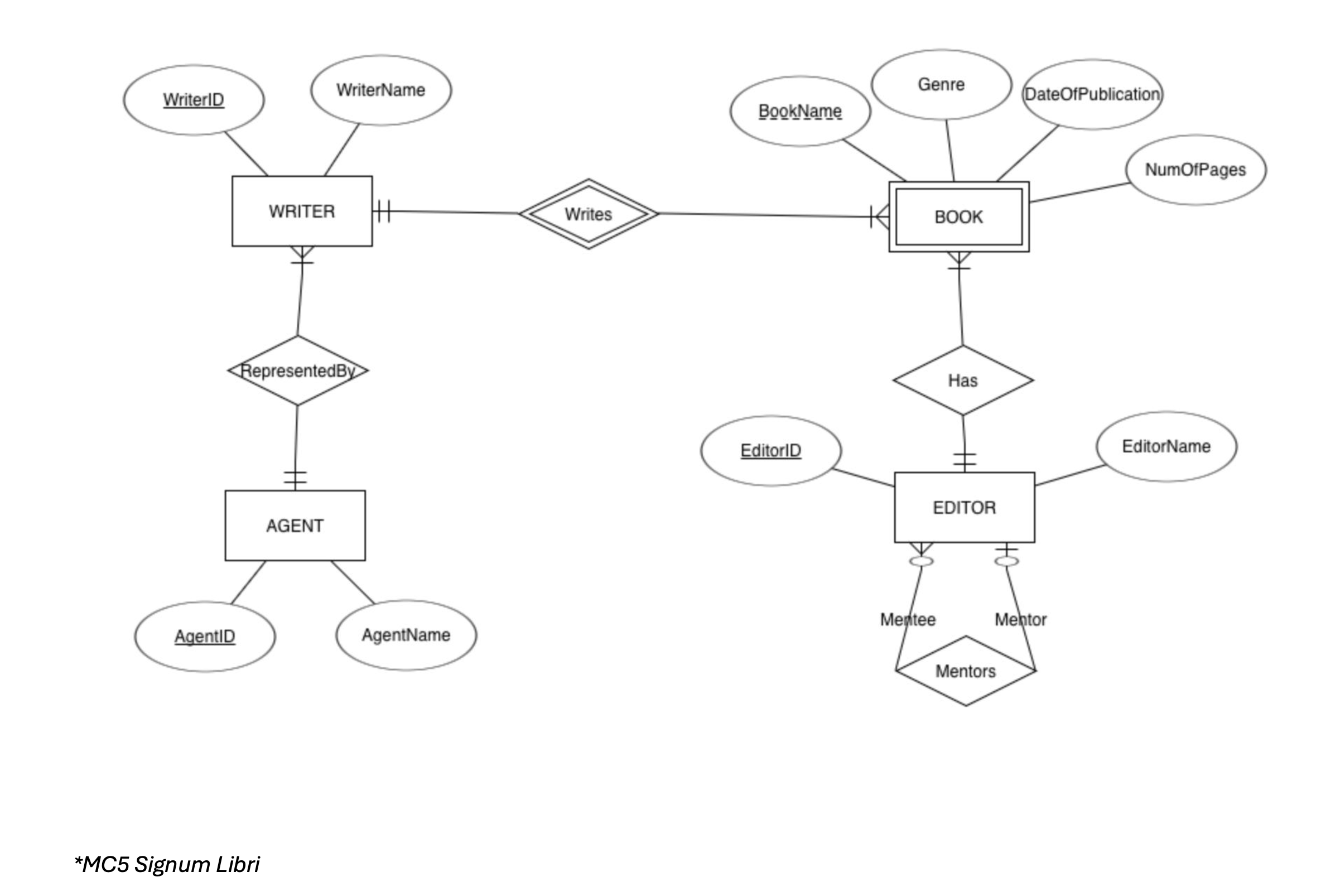
This conceptual model represents a publishing environment involving writers, books, literary agents, and editors.
The major entities are WRITER, BOOK, AGENT, and EDITOR. The Writes relationship connects writers with the books they author. RepresentedBy models the relationship between writers and their literary representation, while Has connects books with their editors.
The Mentors relationship is recursive: the EDITOR entity participates in two different roles, Mentor and Mentee. The model also captures descriptive attributes such as publication date, genre, number of pages, writer information, agent information, and editor information.
Live Entertainment & Instrument Operations
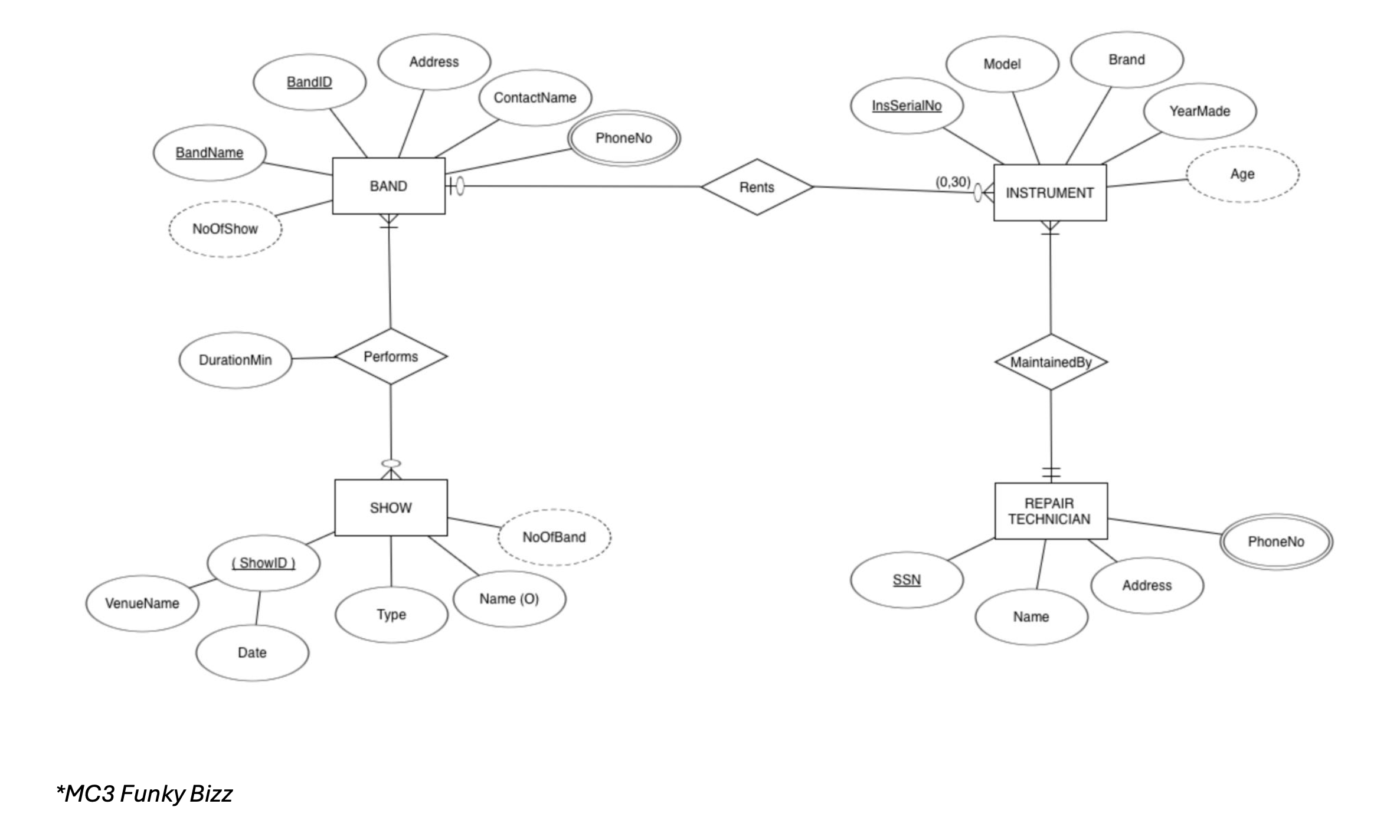
This model represents an entertainment operation coordinating bands, live shows, rented instruments, and repair technicians.
The major entities are BAND, SHOW, INSTRUMENT, and REPAIR TECHNICIAN. Performs represents bands participating in live performances. Rents captures instrument rental relationships between bands and instruments, while MaintainedBy connects instruments with the technicians responsible for maintaining them.
Advanced Attribute Modeling
Multivalued attributes: Phone numbers are modeled as multivalued where an entity may have more than one phone number.
Derived attributes: Values such as instrument Age and the number of shows or bands can be derived from other stored information rather than necessarily being stored independently.
Composite identification: The SHOW entity demonstrates how multiple pieces of information can participate in identifying or describing an event.
Optional attributes: The model distinguishes information that may not necessarily exist for every record.
Cardinality constraints: Relationships capture operational rules governing how bands, shows, instruments, and technicians can interact.
From Business Rules to Data Models
Why Conceptual Modeling Matters
Before tables, SQL queries, dashboards, or analytics pipelines can be built, the underlying business environment must be represented correctly.
Conceptual data modeling creates a shared representation of business entities, their attributes, and the rules connecting them. This helps identify structural issues early and provides a foundation for logical database design, application development, reporting, and analytics.